
One Battle After Another
The Social-Realist Trap

The movie has tempted some critics to take false potshots about how it misrepresents the black radical movement. I want to sidestep all of that, because the movie is not really about the political movements that it seems to be about. It is not set in the 1970s for a specific reason. The politics of the terrorist wing of the New Left were defunct already in 1969. Weatherman had a lot of ruling-class kids mad at the working class for not revolting, and Donald “Cinque” Freeze of the Symbionese Liberation Army (you know, the folks who kidnapped Patty Hearst) looks a whole lot like an MK-Ultra test subject.
No, the movie needs that historical background to foreground its real subject, which is black absence, destruction, oppression, perversion, degradation, and erasure. Quite disciplined, it does not comment on these. They are simply social products on-screen.
the black mother, Perfidia Beverly Hills, is a sexual pervert, a traitor to the cause, and she abandons her child;
Junglepussy is also a nihilistic sexual pervert;
a white man nicknamed “Ghetto Pat” is filling the place of the “traditional” single black mother;
we have a tragic mulatto, Willa, playing Foxy Brown;
there is not a black man on the screen after Wood Harris’s Laredo sends off his “regular working white girl” before the title screen;
the Underground Railroad is run by Mexicans;
the black women who survive the destruction of the movement do so only by retiring to a convent, thereby sacrificing their sexuality (which was perverted anyway) and dealing drugs, presumably to narcotize their class (and race) brothers and sisters
(By sexual perversion I refer to that racially fetishistic Jungle Fever thing, and the use of sexuality for aggression.)
The whole movie is built on the demolition of the black freedom movement and the destruction of black people. The blacks on-screen are bucks (Laredo), mammies (Regina Hall’s Deandra), Jezebels (Teyana Taylor’s Perfidia), Jezebel/Sapphire combos (Brooklyn rapper Junglepussy’s Junglepussy), or tragic mulattoes (Chase Infiniti’s Willa). Consider the fact that there are zero black romantic or sexual relationships in the movie. Not a single one.
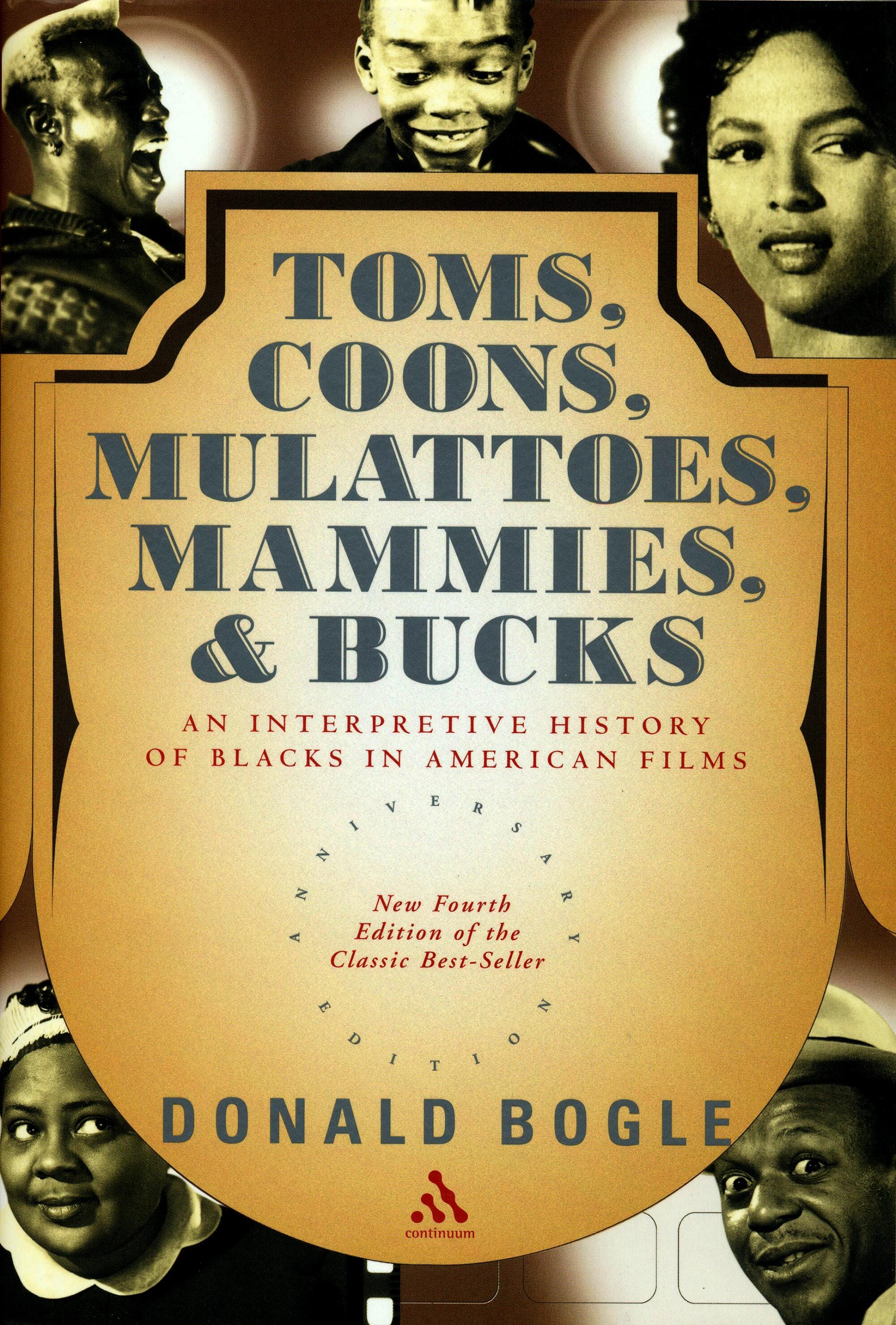
Now, this is smart, powerful, and ambitious, and it made me hope for the best. It’s a setup for a knockout. But Paul Thomas Anderson could not really handle all this. He never figured out how to relate this radical subtext to the surface story, and ended up just settling for the appearance of contemporary relevance, which works out OK precisely because our contemporary USA is indeed built upon the demolition of the black freedom movement and the destruction of black men, women, and children.
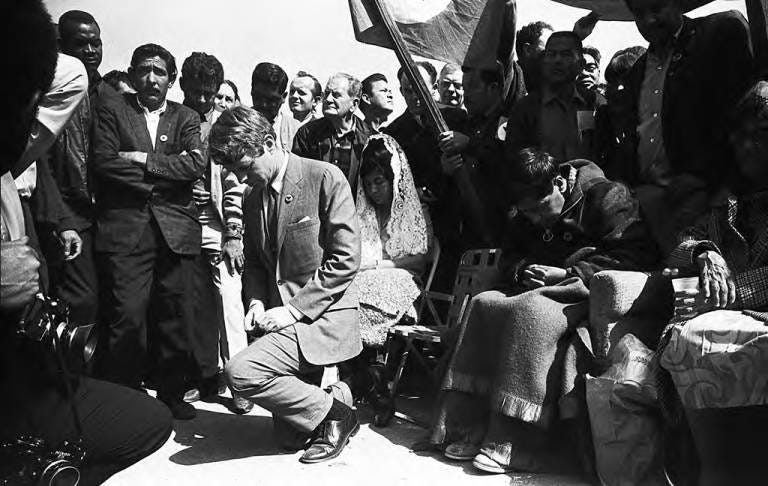
So what’s left on-screen, in the absences and aporias? Immigrants (mostly Mexicans), crazy white folks, and the state. Not for nothing, please recall that back in March 1968, Robert F. Kennedy could have gone with Martin Luther King Jr. to support the Memphis sanitation workers, well-armed with the secret knowledge at the heart of the US enterprise: anti-black racism is and has been the US ruling class’s main weapon in the class struggle.
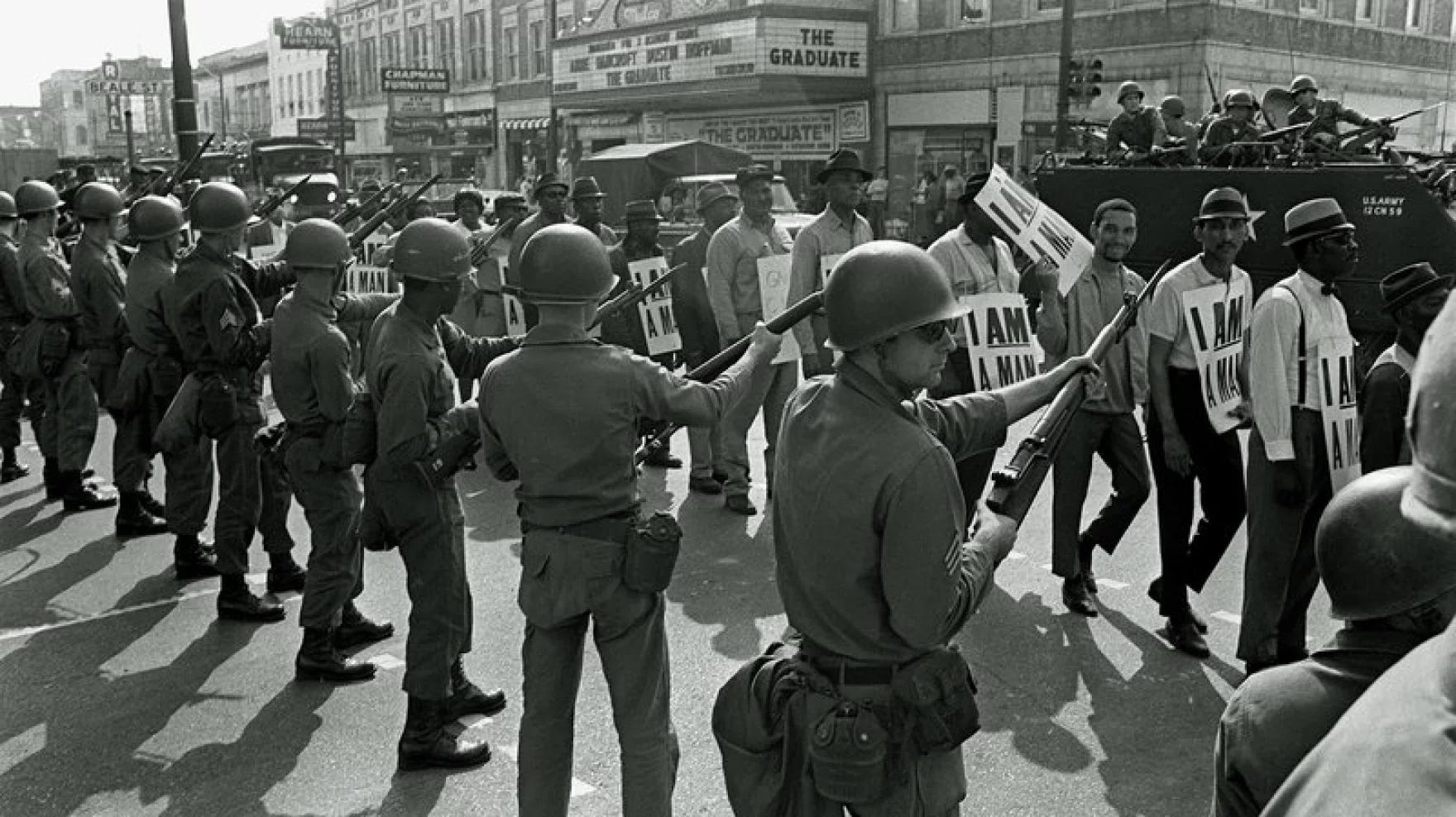
But RFK flew to California instead, for photo ops with the reactionary, nationalistic labor leader César Chavez who was busy attempting to martyr himself in a hunger strike, to support the Delano grape workers. At a critical moment—and both he and MLK died shortly thereafter—RFK distanced himself from the black freedom movement. If you squint just right, you might convince yourself, as many liberals then did, that this pandering to reaction wrapped in ethnicity was something like “staying relevant.” “Black fatigue” is nothing new. Meanwhile, Steven Spielberg said that One Battle After Another “is such a concoction of things that are so bizarre and at the same time so relevant, that I think have become increasingly more relevant than perhaps even when you finished the screenplay and assembled your cast and crew and began production.”
The father-daughter story is fine, but it doesn’t quite rise to the occasion outlined above. As for the crazy white folks, the state and its conspirators are entertaining, but insufficient. Let’s just say ℝeality has far outstripped this representation.
What can make up for the destruction of black people these centuries? Their actual oppression, perversion, and degradation into real-life stereotypes? What can fill the absence left by the demolition of the black freedom movement, which is the only movement to attempt to create a democracy in the United States, and the only movement that could have done so?
The movie is a spectacular failure, but its failure is that of the United States. The filmmaker here attempts to synechdochize ℝeality itself, to show the results of this trauma in the degraded personalities and perversions, and to recapitulate the demolition with the destruction of the French 75, but this cannot work, because the damage is real, and it has affected the critical apparatus.
It has to do with the difference between naturalism/realism and social realism1, and why postmodernism set itself against these, valorizing the inability to perform historical judgment, and why this remains the problematic within which literary and other cultural production takes place since World War II. Let me show and not tell...
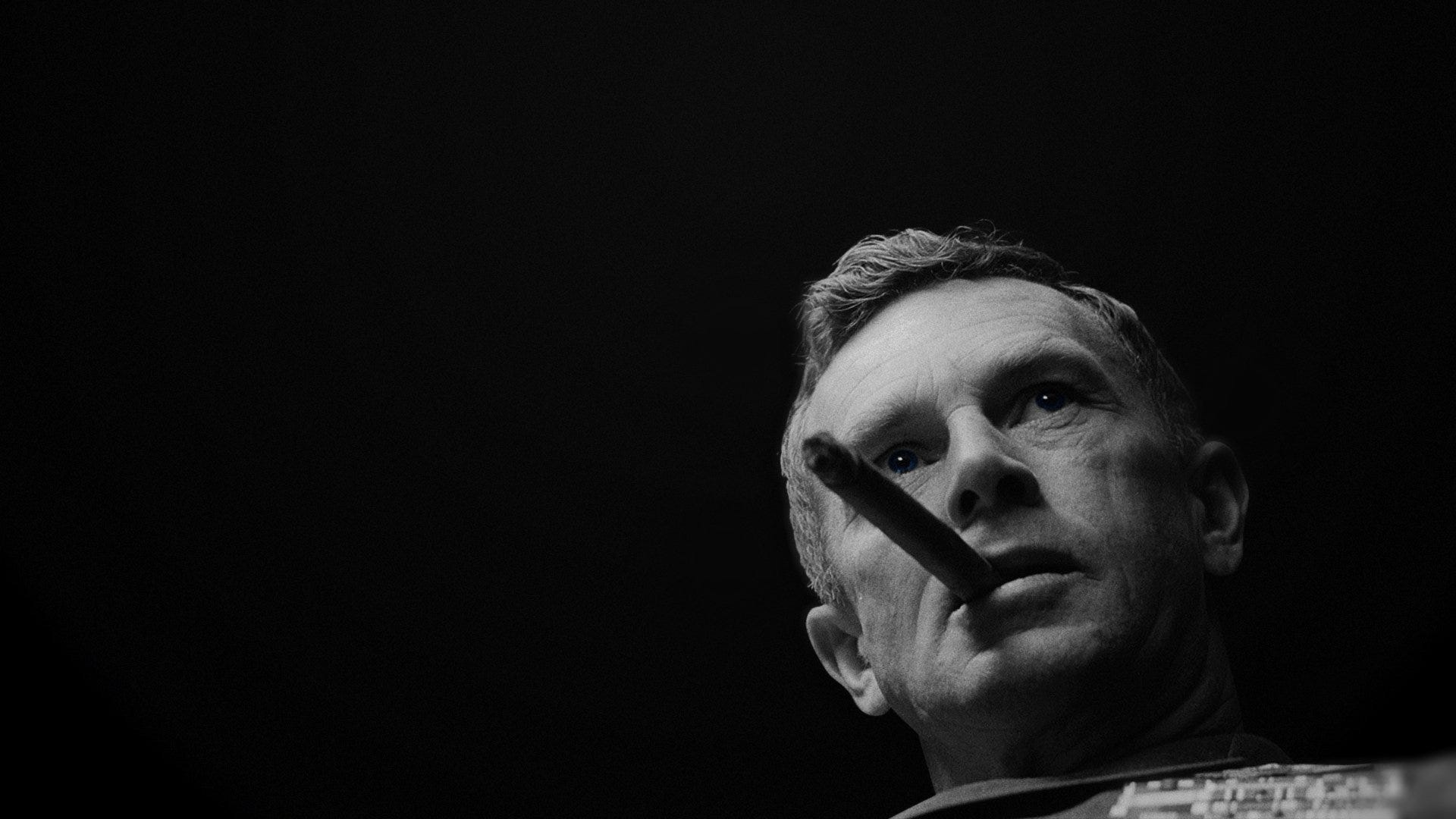
Spielberg again: “I have not seen a movie that is so tonally a relative to Stanley Kubrick’s Dr. Strangelove.”
Dr. Strangelove is an explicit satirical attack on the military-industrial complex by the greatest filmmaker ever. It has a clear point of view and demolishes everything in sight. There is no ambiguity about anything. Spielberg is quite simply lying when he says the tone is similar. Everything about One Battle After Another is ambiguous, even the treatment of Lockjaw, perpetrator and victim of white supremacy and imperialism.
But Dr. Strangelove has no explicit politics, and satire is also built of negations… How does it purchase its clarity? Because, like the civil rights movement, it relied on the common sense democratic-republican values of the postwar era, among both the moviegoing public and the critics.
These are precisely what have been undermined by exactly the destruction Paul Thomas Anderson attempts to treat. No matter how precisely he delineates the depressions, no matter how deftly he crafts the concavities, he must rely on our historical understanding, lest the movie “feel[] like a polemic.”
There are more than a few notable shows and movies from the 2000s that attempted something similar to the subtext of One Battle After Another: they would deeply explore a corner of the world, spiral outward as they raised the stakes, and then suddenly drop the viewer back out on the sidewalk of our contemporary world, dispossessed and impoverished by the very processes just evoked on-screen. I am thinking of David Simon’s and Ed Burns’s The Wire (2002; Wood Harris appears there as Avon Barksdale), Assassination of Richard Nixon (2004; Sean Penn played the assassin Sam Bicke there), and Syriana and Michael Clayton (2005, 2007; both starring George Clooney).
Those productions succeeded because there was an appetite and capacity for critical historical judgment after 9-11. And yet the years have not been kind to this contemporary social realism. Argo and Zero Dark Thirty (both 2012) were reactionary uses of the same approach. And they thereby revealed, for the 8,541st time, that neither documenting social systems nor displaying social products is inherently critical. Benicio Del Toro starred in something similar in Sicario (2015). I hope you can understand from my discussion so far how that movie further devolved social realism into something more akin to pornography than critical exploration.
Art cannot stand on its own. It requires historical perspective on the part of both critics and audience.
And yet the very morning I write this, Luke McGowan-Arnold has written: “I often feel that modern hip hop music is considered a gimmick or not worth serious intellectual interrogation by most literary writers…. Trap is the music of the modern Black proletariat, and…it could even be understood as the soundtrack to all of American life cutting even across class in some ways.” There is no further elaboration of the complexities of the issue. In fact, with this, the object of criticism has actually been removed from criticism.
Also this very morning I had the extreme displeasure of reading from one of my favorite YouTubers, Ian Cattanach of @WriteConscious, that “Yung Lean, a 15-year-old from Sweden, created a rap renaissance that launched a new genre, which has had hundreds of billions of streams and created thousands of full-time jobs for rappers, producers, tour managers, merch managers, etc.” Mr. Literary Renaissance himself is praising here the rise of Soundcloud rap, yet another enablement of the most degraded, perverted, and backward cultural expressions of the blues tradition. This is something like Stanley Crouch in 1990 praising Eazy-E because neither NWA nor Ice Cube would exist without him, and both have sold millions of records.
Adorno wrote somewhere (Minima Moralia?) that the purpose of mainstream art criticism is to justify whatever is put out, and that’s true today more than ever. Critics have let One Battle After Another slide for several reasons. Not only because
they probably don’t recognize what is on the screen, but
because what is on the screen—black degradation—is a perennial bestseller, and
because even if they did recognize it, they either
wouldn’t recognize that it is an attempt to deal critically with the tragedy of American history,
and even if they did, they wouldn’t know how or why it fails,
and even if they did, they wouldn’t say anything because this is a business, after all.
The success of the state in destroying the black freedom movement has disoriented the entire population and made too many people resistant to and, moreover, incapable of historical judgment. Art of this kind has thereby been made generally inaccessible, and therefore meaningless.
Social realism has become a trap.
“The music really gets at the nihilism of will that permeates every sector of American society, right now.” Yes, Luke. Yes, it does.
Naturalism and realism were nineteenth-century bourgeois views of the “Darwinian” systems at work in urbanizing imperial states. Social realism was a twentieth-century proletarian view of the class systems at work in urbanized imperial states. The stories could be very similar. Frank Norris of McTeague would probably have loved James Farrell’s Studs Lonigan. But the reception, rooted in the lived experience of the transition from a predominantly agricultural working population to a waged, urban working population, made all the difference. That’s also why the classical workers’ movement was so strong. The politics of social realism were obvious to those who had lived the transition.
PTA’s biggest mistake was pissing all over Thomas Pynchon’s novel and shitting on its timeline. As such, OBAA never gets in sync, feels like an inside joke, and no matter how great the cinematography or brilliant the performances … feels like a preachy little morality tale that is too precious for its own good. What’s worse is that is its goal. Whereas Kubrick’s film takes dead aim at its era, it doesn’t gaze at itself; it doesn’t preach or moralize; it saturates with deadpan observations; and, above all, it respects its audience. PTA overthinks, Kubrick’s matter-of-fact.
I could sense something was off about this film. The argument that the critical apparatus was destroyed by the same historical trauma the film attempts to treat, making the film's failure structural rather than personal, is the kind of insight that makes you put the essay down and stare at the wall for a minute.
Prince Kudu Ra doing lit criticism....now yall know yall in trouble. Absolutely, loved this piece.